Sourness Intensity
Tamarind aged longer develops a deeper, more complex sourness. Batches may vary slightly in tang intensity depending on the age of the pulp and the harvest season.
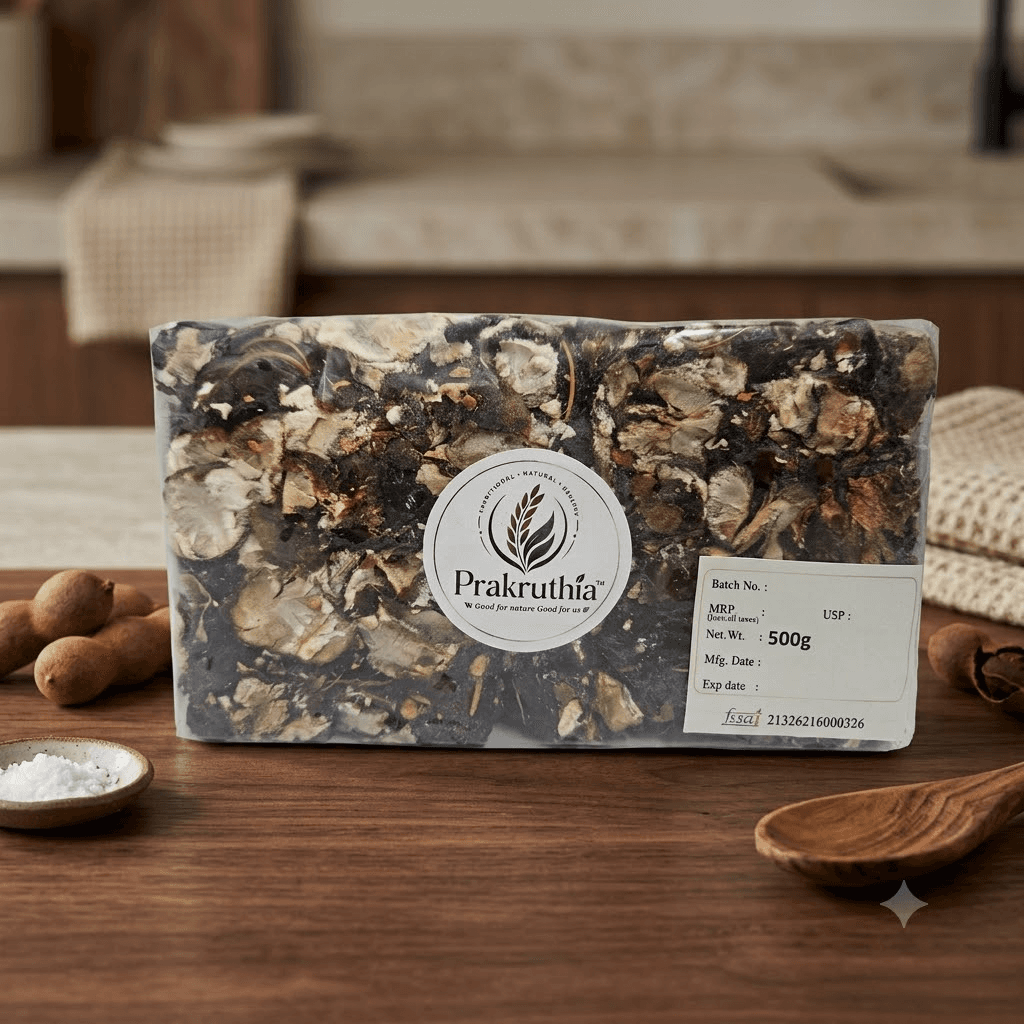
Sun-dried, naturally aged valanpuli for the authentic sour note in Kerala's beloved dishes
Tamarind holds a central, irreplaceable position in Kerala's culinary traditions. From the sharp tang of a well-made Vatha Kuzhambu (tangy berry curry) or Puliyodarai (tamarind rice) to the comforting warmth of sambar and rasam, from fiery pickles to cooling summer drinks, tamarind is the backbone of sourness in South Indian kitchens. In Kerala, valanpuli specifically refers to the Malabar tamarind variety — prized for its deep, complex sourness that develops character as it ages.
Prakruthia sources valanpuli from mature tamarind trees in Kerala's midland regions, where generations of families have tended these trees as part of their homestead heritage. We work directly with small growers who harvest only fully ripened pods, ensuring the rich flavour profile that distinguishes Kerala tamarind from commercially processed alternatives.
What makes it special
The journey from tree to kitchen follows a time-honoured process that respects the fruit's natural rhythm. Pods are harvested only after they have fully matured on the tree, when the shell turns brittle and the pulp reaches its peak sourness. The harvested pods are then spread out for natural sun-drying over several days, allowing moisture to reduce gradually without any artificial heat treatment.
Once dried, each pod is manually de-seeded by hand — a patient, meticulous process that ensures clean, fibre-rich pulp without shell fragments. The deseeded tamarind is then aged naturally for several months, during which the flavour deepens, the sourness mellows into a richer complexity, and the texture becomes dense and concentrated. No chemicals, no preservatives, no shortcuts — just sun, time, and skilled hands.
Naturally aged pulp
Pulp naturally aged for months to mellow the sourness into rich complexity
Each batch of Chakka Varatty is uniquely its own — a reflection of the season, the fruit, and the hands that made it.
Tamarind aged longer develops a deeper, more complex sourness. Batches may vary slightly in tang intensity depending on the age of the pulp and the harvest season.
As tamarind matures and ages, its colour naturally darkens from a warm brown to a rich, deep mahogany. Darker colour indicates more concentrated flavour.
Natural sun-drying means moisture levels can vary slightly between batches depending on weather during drying. The pulp may feel softer or firmer accordingly.
The fibrous strands within tamarind pulp vary naturally between pods. Some batches may have finer, more delicate fibres while others are slightly coarser — both dissolve well when soaked.
Variation in colour, texture, and sweetness is a natural quality of handcrafted, small-batch production — not a defect. It is precisely what makes each jar special.
Vatha Kuzhambu (a classic South Indian tangy curry with sun-dried berries) or Puliyodarai (tamarind rice) relies on tamarind for its signature rich, sour gravy — soak a small piece in warm water and strain the extract into your cooking base for that authentic tang. For sambar and rasam, tamarind water forms the essential sour foundation that balances lentils and spices. Traditional pickles and chutneys use tamarind paste as both a flavouring and a natural preservative.
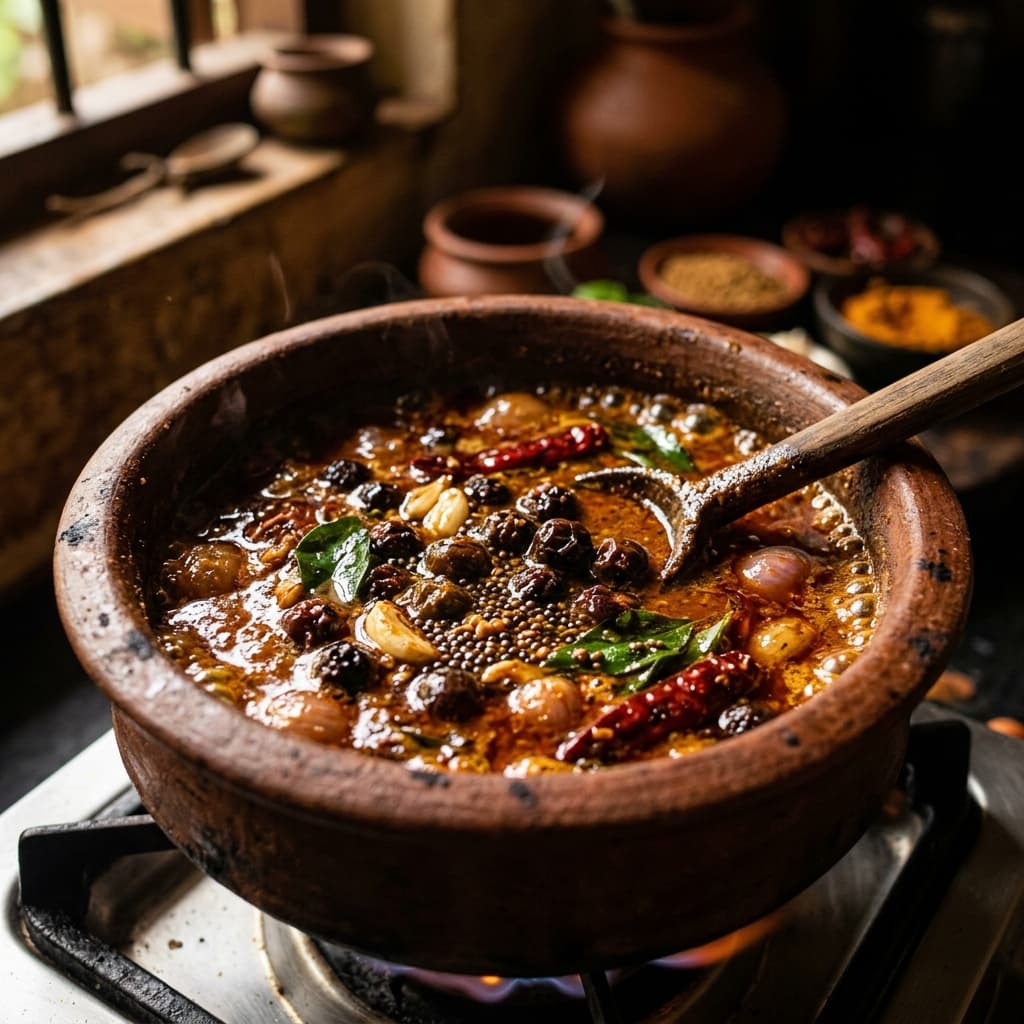
Soak a walnut-sized piece in warm water, strain, and add to your Vatha Kuzhambu or Puliyodarai base for the signature tangy gravy that pairs perfectly with red rice.
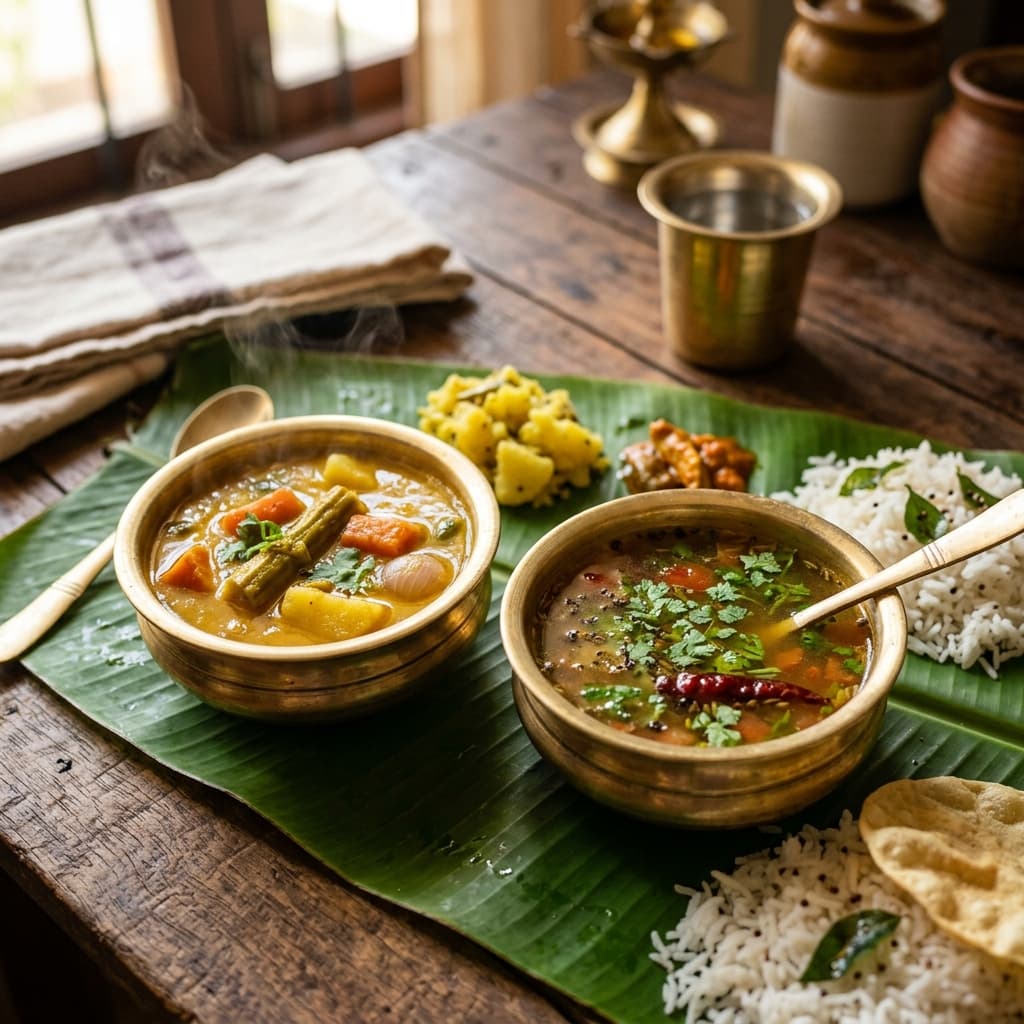
The essential sour foundation for both sambar and rasam — tamarind water balances the earthiness of lentils and the heat of spices into a harmonious broth.
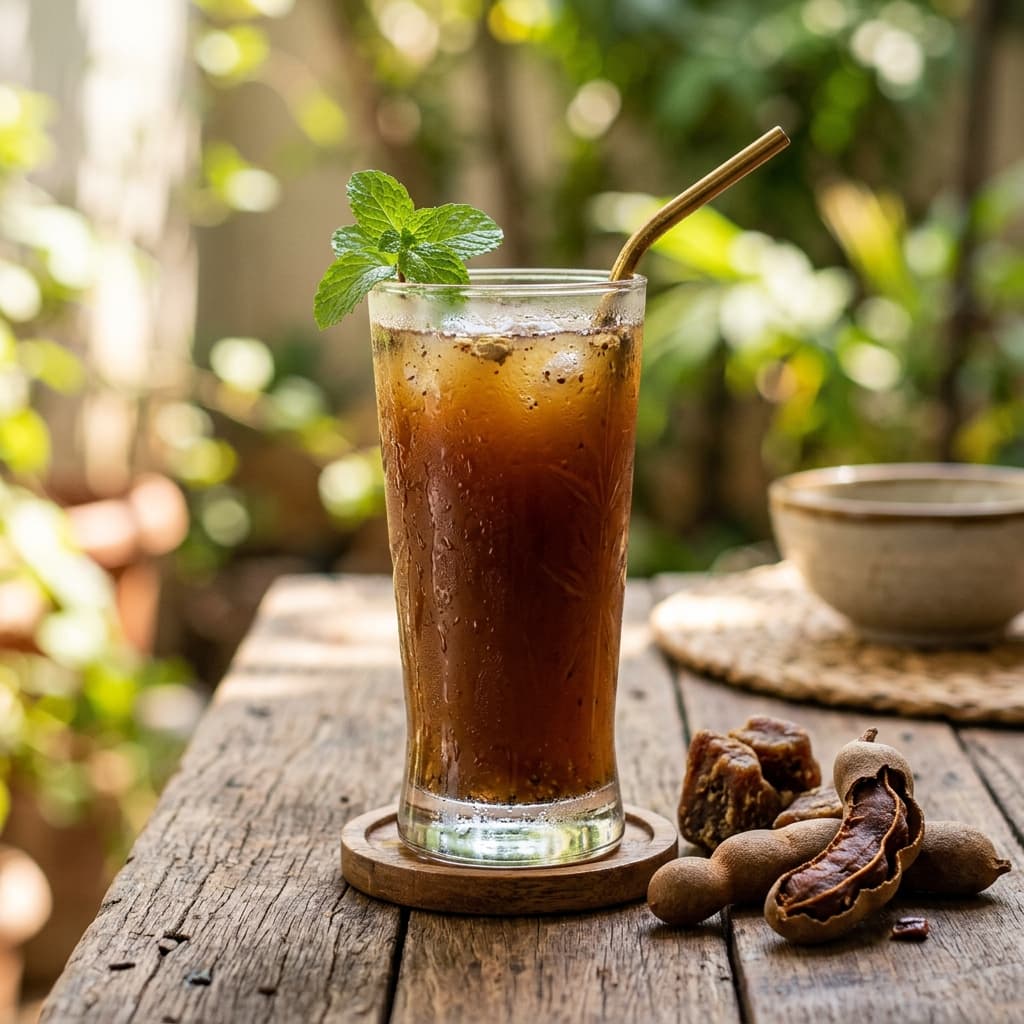
Dissolve tamarind in water, sweeten with jaggery, and add a pinch of cardamom for panaka — a traditional Kerala cooler that refreshes and aids digestion.
Tamarind trees have been a defining feature of Kerala homesteads for centuries. Families plant tamarind trees knowing they are planting for the next generation — these slow-growing giants take decades to reach full productivity but then yield abundantly for over a hundred years. In traditional Kerala neighbourhoods, sharing tamarind between homes was a common practice, an unspoken bond of community and mutual reliance.
During Onam sadya preparations, tamarind plays a starring role — from the essential pulissery to the tangy olan and the beloved parippu curry. The tamarind tree in the courtyard was never just a source of food; it was shade for the household, a gathering place, and a living connection between generations of cooks who passed down their recipes alongside its harvest.